
REAL ESTATE

Green Real Estate: Why Sustainable Housing Matters to the Next Generation | ThePropzy

As climate change worsens, sustainability is no longer optional—it’s essential. For Gen Z and Millennials, eco-friendly housing is not just about saving the planet but also about long-term cost savings and healthier living environments. What is Green Real Estate? Green buildings are designed to use resources efficiently and minimize environmental impact. Common features include: Solar panels...

Co-Living Spaces: The Future of Affordable Urban Living | ThePropzy

Urbanization is at its peak, but buying or even renting homes in big cities has become unaffordable for many young professionals and students. This has led to the rise of co-living spaces, a trend that blends affordability, community living, and convenience. Unlike traditional paying guest (PG) accommodations or rental flats, co-living offers an organized and tech-enabled approach to shared...

Smart Homes: How Technology is Reshaping Real Estate for Gen Z and Millennials | ThePropzy

The new generation of homebuyers—Millennials and Gen Z—are no longer looking for just four walls and a roof. They want homes that are smarter, safer, and more connected. With the rise of the Internet of Things (IoT), artificial intelligence (AI), and automation, real estate is undergoing a digital revolution. Smart homes are not only enhancing lifestyle convenience but also transforming property...

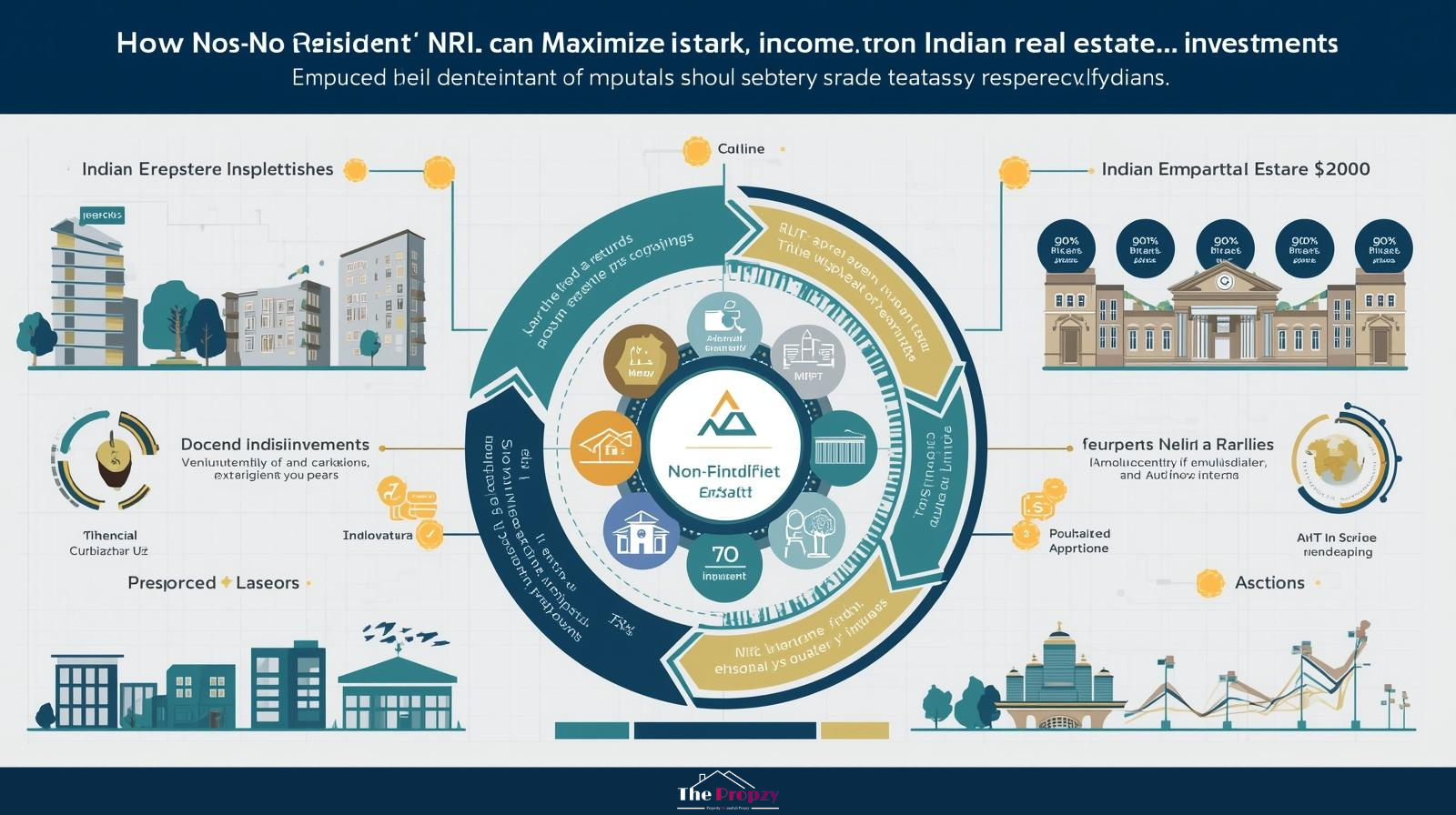
How NRIs Can Maximize Returns from Indian Real Estate Investments

For Non-Resident Indians (NRIs), Indian real estate remains one of the most lucrative investment options. With a growing economy, rising property values, and favorable exchange rates, NRIs can create substantial wealth by investing back home. This blog outlines how NRIs can maximize returns from Indian real estate. 1. Why Indian Real Estate Attracts NRIs Emotional connection to...

Emerging Real Estate Hotspots in India for 2025 and Beyond

India’s real estate market is evolving rapidly, with infrastructure projects, government schemes, and corporate expansions shaping new investment hubs. Investors looking for high-growth areas must identify the next hotspots before they mature. In this blog, we’ll cover the most promising real estate hotspots in India for 2025 and beyond. 1. Noida & Greater Noida (U.P.) Driven by...

The Role of REITs in Diversifying Your Real Estate Portfolio

For decades, real estate investment in India meant buying land, apartments, or commercial property. But with the launch of Real Estate Investment Trusts (REITs), even small investors can now participate in large-scale property investments. In this blog, we’ll explore how REITs help diversify portfolios and why they’re becoming a preferred investment choice. 1. What Are REITs? A REIT is a...

Commercial vs. Residential Real Estate – Which is Better for Investors? | ThePropzy

One of the most common dilemmas for investors is deciding between commercial and residential real estate. Both offer distinct advantages and risks. While residential properties are more affordable and emotionally driven, commercial real estate often brings higher returns and professional tenants. In this blog, we’ll compare the two asset classes to help you decide which suits your investment...

Top Strategies for Successful Real Estate Investment in India | ThePropzy

Real estate has always been one of the most preferred investment options in India. With rapid urbanization, economic growth, and infrastructure development, the Indian property market continues to offer attractive opportunities. However, successful real estate investment is not just about buying property—it’s about adopting the right strategies that minimize risks and maximize returns. In this...

The History of Delhi’s Iconic Places | ThePropzy

The History of Delhi’s Iconic Places | ThePropzy

Delhi, the heart of India, is more than just the capital city—it is a living museum of history, culture, and architecture. From ancient forts and tombs to Mughal-era masterpieces and colonial landmarks, every corner of Delhi has a story to tell. Known as “The City of Cities”, Delhi has been built and rebuilt over centuries by various dynasties, each leaving behind monuments that reflect their power,...

The Ultimate Guide to NRI Investment in Indian Real Estate Indian real estate has always been one of the most attractive avenues for Non-Resident Indians (NRIs) looking to diversify their portfolios, maintain a connection with their homeland, and earn consistent returns. With rapid urbanization, infrastructure growth, and government reforms, the Indian property market offers immense opportunities for NRIs—whether for residential use, rental income, or long-term capital appreciation. If you’re an NRI considering investing in Indian real estate, this ultimate guide will walk you through everything you need to know: rules, benefits, procedures, taxation, and tips to make smart investment choices. Why NRIs are Investing in Indian Real Estate Several factors make India an attractive destination for NRI investors: Emotional Connection: Many NRIs prefer owning a home in India for personal use or as a retirement plan. High Returns: Property prices in prime cities like Mumbai, Bengaluru, Delhi NCR, and Hyderabad have consistently appreciated over time. Rental Income: Growing demand for housing and office spaces ensures steady rental returns. Weaker Rupee Advantage: A depreciating rupee increases the purchasing power of NRIs when investing from abroad. Favorable Policies: Government reforms such as RERA, GST rationalization, and digital registration have increased transparency and ease of investment. Who Can Invest? As per the Foreign Exchange Management Act (FEMA), NRIs and Persons of Indian Origin (PIOs) are allowed to invest in Indian real estate, except for: Agricultural land Farmhouses Plantation properties They can, however, buy: Residential properties (apartments, villas, plots) Commercial properties (offices, shops, retail spaces) There is no limit to the number of residential or commercial properties an NRI can purchase in India. Modes of Property Purchase for NRIs NRIs can buy property in India through the following methods: Self-Funded Purchase Using funds from an NRI bank account such as NRE (Non-Resident External) or NRO (Non-Resident Ordinary) accounts. Home Loans NRIs are eligible for home loans from Indian banks. Loan repayments must be made through NRE, NRO, or FCNR (Foreign Currency Non-Resident) accounts. Joint Ownership NRIs can purchase property jointly with another NRI. Joint ownership with a resident Indian is also allowed, provided the resident is eligible to buy property. Step-by-Step Guide for NRIs to Invest in Indian Real Estate Step 1: Decide the Purpose of Investment Self-use: A home for your family or retirement. Rental income: Residential apartments in metro cities are in high demand. Capital appreciation: Commercial spaces and upcoming suburban projects often deliver high returns. Step 2: Choose the Right Location Metro Cities (Mumbai, Delhi NCR, Bengaluru, Hyderabad): High rental demand and long-term appreciation. Tier-2 Cities (Pune, Kochi, Chandigarh, Indore): Affordable entry points and rising infrastructure. Emerging Hubs (Noida, Gurugram, Navi Mumbai): Fast-growing with strong government-backed projects. Step 3: Verify Legal Documentation Always check: Title deed and ownership history. Encumbrance certificate (ensuring no pending legal disputes). RERA registration for under-construction properties. Approval from local municipal authorities. Step 4: Arrange Financing Open NRE/NRO/FCNR accounts for fund transfers. Check bank eligibility for NRI home loans. Consider tax implications before repatriating funds abroad. Step 5: Register the Property Registration must be done at the Sub-Registrar’s office where the property is located. NRIs can register in person or authorize a representative via Power of Attorney (PoA). Taxation Rules for NRIs in Real Estate Understanding taxes is crucial for maximizing returns. 1. Income Tax on Rental Income Rental income earned in India is taxable under Indian law. A flat 30% deduction is allowed on rental income for maintenance expenses. Tax Deducted at Source (TDS) at 30% is applicable, but NRIs can claim refunds while filing returns. 2. Capital Gains Tax Short-Term Capital Gains (STCG): If property is sold within 2 years of purchase, gains are taxed as per income tax slab. Long-Term Capital Gains (LTCG): If sold after 2 years, taxed at 20% with indexation benefits. 3. Tax Benefits NRIs can claim deductions under Section 80C for principal repayment and Section 24 for interest on home loans. 4. Double Taxation Avoidance Agreement (DTAA) If your country has a DTAA with India, you can avoid paying tax twice on the same income. Repatriation of Funds One of the most common concerns for NRIs is: Can I take money back abroad? Yes, NRIs can repatriate up to two residential properties purchased in India. Sale proceeds can be repatriated through NRE accounts, subject to RBI guidelines. Proof of original foreign exchange inflow is required for repatriation. Benefits of NRI Investment in Indian Real Estate Portfolio Diversification: Real estate balances equity and fixed-income investments. Emotional Security: Having a property in India provides a sense of belonging. Passive Income: Rental yields in India are growing, especially in IT hubs and metro cities. High Growth Potential: With smart cities, metro projects, and industrial corridors, real estate values are set to rise. Challenges Faced by NRIs While opportunities are vast, there are challenges: Property Management: Difficult to oversee maintenance while living abroad. Legal Disputes: Title issues and encumbrances can lead to long court cases. Fraud Risks: Some NRIs fall prey to fraudulent developers or middlemen. Currency Fluctuations: Exchange rate changes may impact overall returns. Expert Tips for NRIs Always prefer RERA-registered projects for transparency. Hire a legal advisor to check property documents before purchase. If you cannot visit India, give PoA only to a trusted family member or lawyer. Consider hiring a property management service to handle rentals and upkeep. Diversify across residential and commercial properties for balanced returns. Future of NRI Investment in India Government initiatives like: Smart Cities Mission Housing for All by 2025 Real Estate Regulation and Development Act (RERA) 100% FDI in townships and construction have made Indian real estate safer and more profitable for NRI investors. With the Indian economy expanding and demand for housing increasing, NRIs can expect strong and stable growth in the coming years.

The Ultimate Guide to NRI Investment in Indian Real Estate

Indian real estate has always been one of the most attractive avenues for Non-Resident Indians (NRIs) looking to diversify their portfolios, maintain a connection with their homeland, and earn consistent returns. With rapid urbanization, infrastructure growth, and government reforms, the Indian property market offers immense opportunities for NRIs—whether for residential use, rental income, or long-term...